


Key Takeaways
- Versatile Design Semi-inground pools blend features of both in-ground and above-ground pools, offering a unique aesthetic
- Cost-effective They are generally cheaper than in-ground pools and can be installed on sloped terrains
- High Water Table Solution Suitable for areas with high water tables where in-ground pools are impractical
- Customizable Features Can incorporate design elements like fountains and infinity edges
- Terrain Friendly Ideal for uneven or sloped landscapes, minimizing the need for extensive earthworks
- Aesthetic Appeal Semi-inground pools can integrate seamlessly with decking and the natural environment
- Creative Potential Allows for features like water’s edge bars and functional walls
Semi-inground pools can grab people’s attention like almost no other pool design. You’ve probably thought about the benefits of both in-ground and above-ground pools. But semi-inground pools are both visually distinct and offer the best of both worlds. However, those unique benefits also come with some important issues to consider. And you’re about to learn everything you need to know in order to decide whether this intriguing design is right for you.
What Is a Semi-Inground Pool?
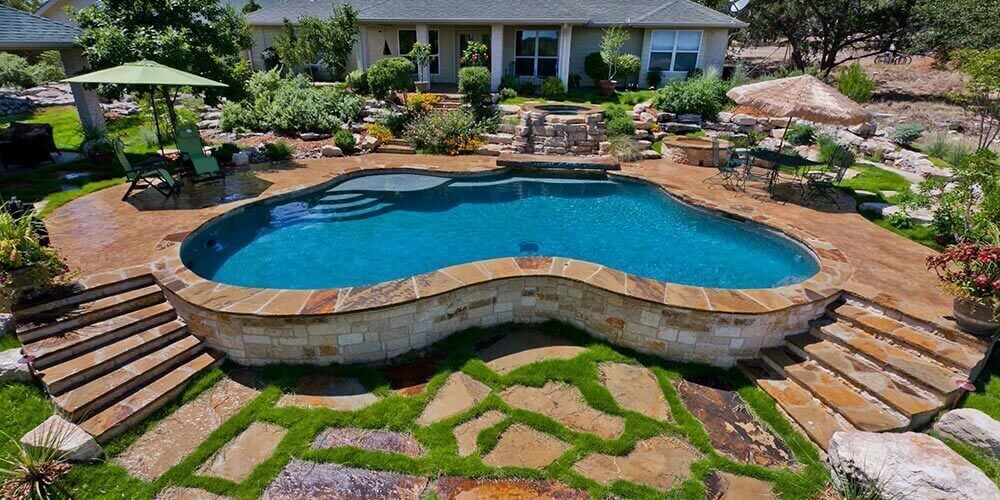
A semi-inground pool can be best thought of as a pool that begins under the ground’s surface and continues on for at least a few feet above it. In short, a semi-inground pool is exactly as the name describes. It’s a pool that is partially in and above the ground.
Why Do Semi-Inground Pools Exist?
The concept of a semi-inground pool might seem a little odd at first. People unfamiliar with them often wonder what the appeal might be over a standard in-ground or above-ground pool. But there are many different reasons to build a semi-inground pool.
Some of the most important comes down to geology and geography. For example, your property might have uneven ground or lots of sloped areas. The amount of work needed to fully level out your property for a pool can be challenging in terms of both time and money. But you can build a semi-inground pool on sloped ground by incorporating retaining walls. And by doing so you can create a more unified and visually appealing whole that really works with your land’s aesthetic.
A semi-inground pool is also a solution for property owners dealing with high water tables. Ironically, underground water can do a lot of damage to an in-ground pool. A high water table, meaning water that collects close to the ground’s surface, can exert considerable pressure on an in-ground pool as the water moves around throughout the year. A high water table typically prevents the construction of in-ground pools. But you can simply construct a semi-inground pool to sit safely above a high water table.
Of course, the benefits of a semi-inground pool extend beyond geological constraints. For example, semi-inground pools are easily extended with fountains or other ornaments. And you can even work them into your deck. In general, they’re a fantastic option for people who want to let their creativity shine.
Differences between Semi-inground, In-ground, and Above-ground Pools
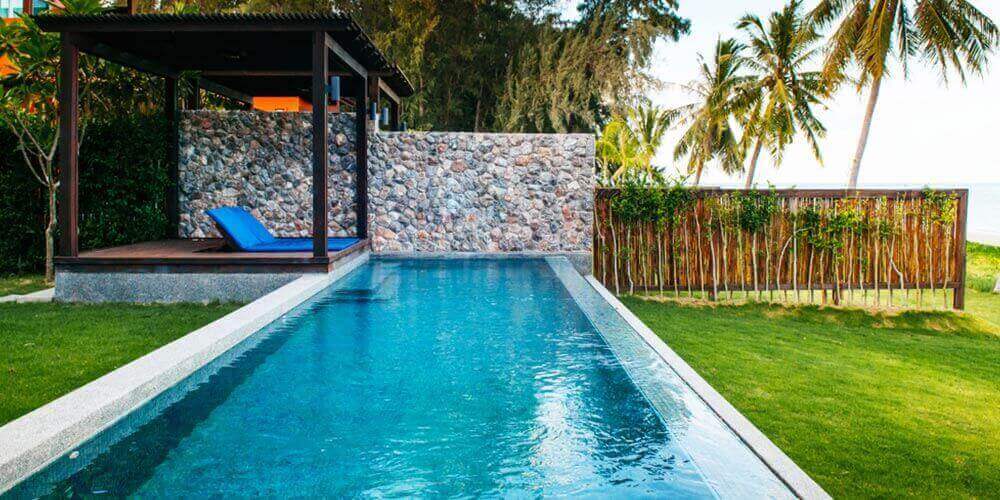
A semi-inground pool can be easily mistaken for an above-ground pool. After all, both pool types have walls extending out of the ground. But the main difference between the two designs is that an above-ground pool is constructed entirely above the ground. A semi-inground pool begins underground and continues above ground. The distinction is most easily seen in the pool’s walls. An above-ground pool typically has fairly thin walls, while a semi-inground pool usually has walls thick enough to sit on. And of course, a fully in-ground pool doesn’t extend above ground level at all.
Benefits of a Semi In-Ground Pool
You’ve seen a few important benefits so far. But you might be surprised by some of the less obvious elements of a semi-inground pool. While there are a lot of great things about this design, the following are among their most important but subtle elements.
Allow for an Unobtrusive Pool in a Situation Where a Fully In-Ground Pool Isn’t Possible
Semi-inground pools are typically less intrusive than above-ground pools because they’re partially below ground. This makes it an especially attractive option for people who want to keep their pool reasonably unobtrusive. Likewise, it’s a good match for people who can’t have an in-ground pool but still want a fairly subtle aesthetic.
Generally Cheaper Than an In-Ground Pool
Above-ground designs are typically the least expensive option for a pool. But a semi-inground design is a close second. You’ll be able to keep the overall cost of your pool down by going with a semi-inground option.

Infinity Edge
Semi-inground pools let you take pool design in some truly amazing directions. And infinity edge designs are one of the best examples of what you can do with semi-inground pools. Infinity edge designs use a semi-inground pool’s edge to create an illusion of infinite, watery, expanses. This is an especially effective illusion if you can incorporate the edge of a pool into a natural slope on your property. It’s like having the visual appeal of a huge lake in your own backyard.

Water’s Edge Bar
A water’s edge bar is your own semi-aquatic bar right on the edge of a semi-inground pool. The pool’s positioning makes it easy to incorporate bar areas or other furnishings onto its edge. This can be a full deck or a more intimate bar area. Despite the name, you can work a water’s edge bar area into almost anything you’d like. Basically, if there’s an activity that benefits from a countertop then it can be mimicked with this design element.
Pool Walls Can Become Feature Walls
A feature wall refers to anything which turns the wall of a semi-inground pool into a functional element. For example, the previously mentioned infinity edge design leverages a wall to create the illusion of infinite space. But the term is more often used to refer to something you’ll be physically interacting with on a regular basis. For example, by adding shelves that could hold decorations, pool toys, etc.
Living Space at Water Level
The semi-inground positioning and solid construction mean that it’s easy to incorporate the pool into your life. For example, unlike above-ground pools, the semi-inground style has firm walls that you could sit on while enjoying the sight of your pool.
Types of Semi-Inground Pools
There are endless different customization options for semi-inground pools. But in general, you can narrow their specific types down to a couple of options. Each puts emphasis on one of the two elements of a semi-inground pool.
Above-Ground Semi-Buried
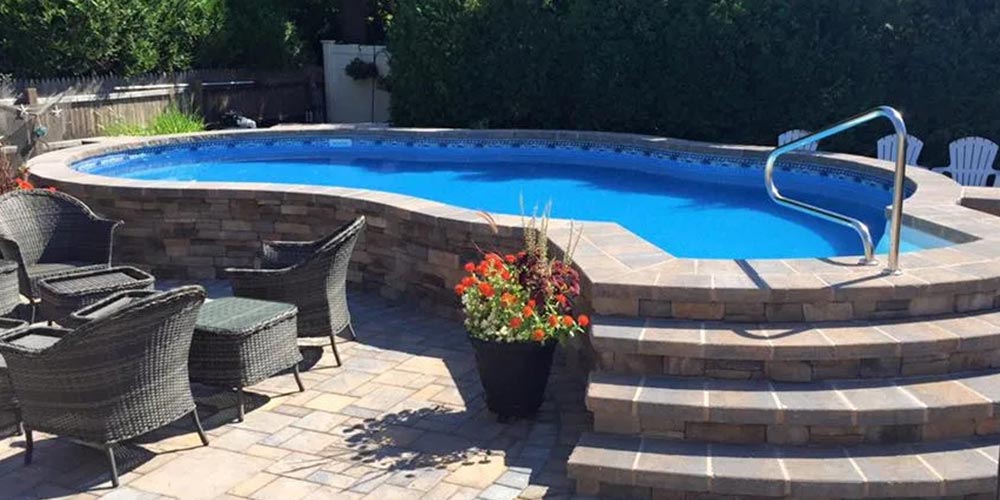
An above-ground semi-buried pool puts an emphasis on having water above the ground level. You’ll still have the niceties of a semi-inground pool, such as thicker pool walls. And the above-ground portion of the pool will still be relatively small when compared to an above-ground pool.
Inground Semi-Exposed
An in-ground semi-exposed pool is essentially the flipside of an above-ground semi-buried pool. This style of semi-inground pool puts an emphasis on the in-ground part of the equation. The main difference between these two styles essentially comes down to how high the pool walls will extend above the ground.
50 Semi-Inground Pool Design Ideas
Whether you’re just starting to browse or narrowing down your shortlist, the 50 designs below cover every style, terrain type, and budget.
A. Deck-Based Designs
- 1. Wraparound Deck Pool — A continuous deck circles all sides for a seamless yard-to-water transition. Best for: flat or gently sloped yards.

- 2. Multi-Level Deck Pool — Stepped deck elevations create distinct zones for dining, lounging, and pool access. Best for: sloped yards with 3–6 ft grade change.

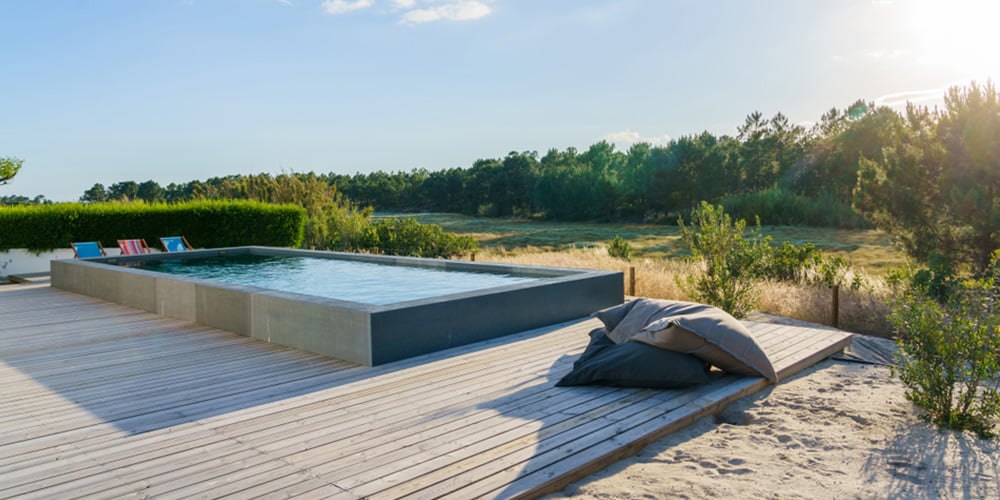
- 3. Flush Deck Illusion Pool — Deck built right to the coping so the water looks nearly flush with the surface — the inground look at a fraction of the cost.
- 4. Split-Level Deck Pool — One side sits higher, incorporating built-in seating, planters, or a fire feature on the raised section.
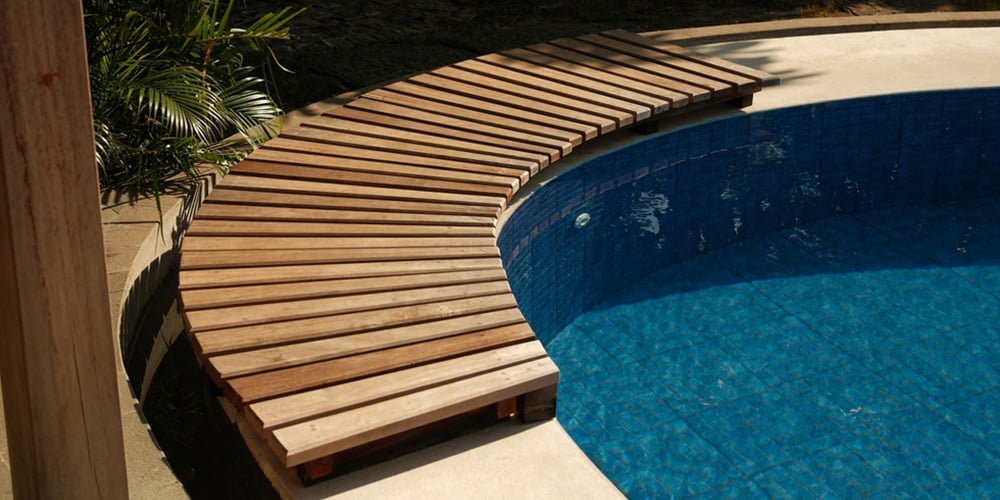
- 5. Pergola-Integrated Deck Pool — A pergola or shade structure is built into the deck plan. Popular in warm climates for year-round use.
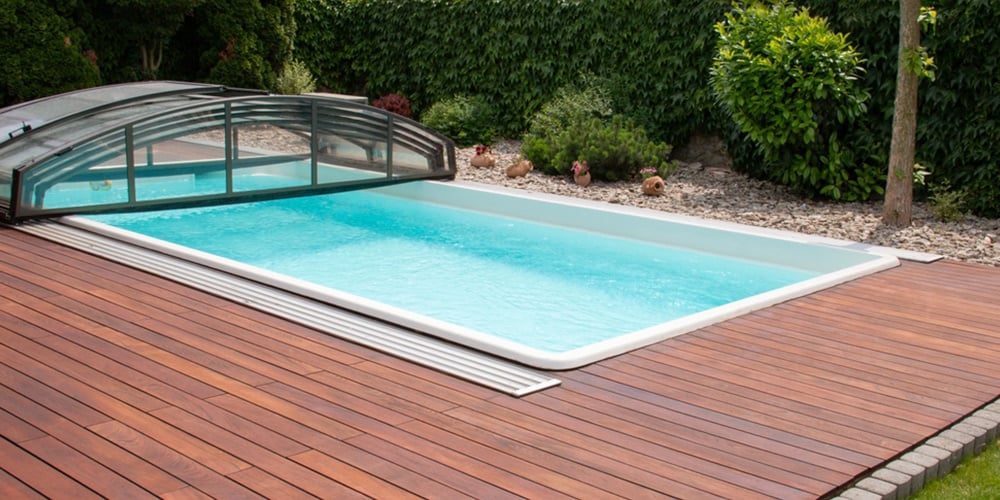
- 6. Deck with Built-In Bench Seating — The pool wall is capped with composite or stone so guests can sit at water’s edge without separate furniture.
- 7. Deck with Tanning Ledge — A shallow ledge just below the waterline creates a wading and sunbathing zone accessible from the deck.
- 8. Bi-Level Entertainment Deck — Upper level: outdoor kitchen and dining. Lower level: pool access and lounging. The pool becomes the centrepiece of a complete outdoor living room.
B. Sloped Yard Designs
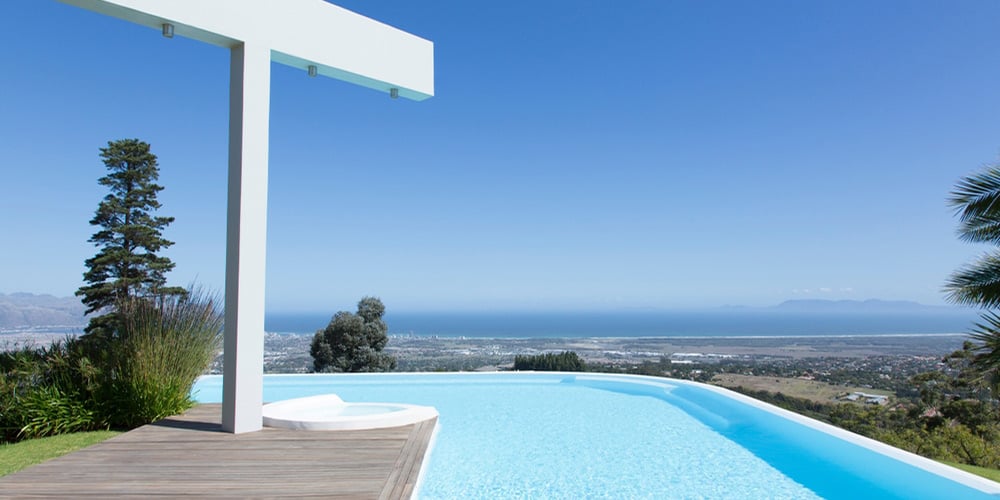
- 9. Hillside Infinity Edge Pool — The pool is set into a slope so one edge blends with the landscape beyond. The most dramatic semi-inground design for sloped properties.
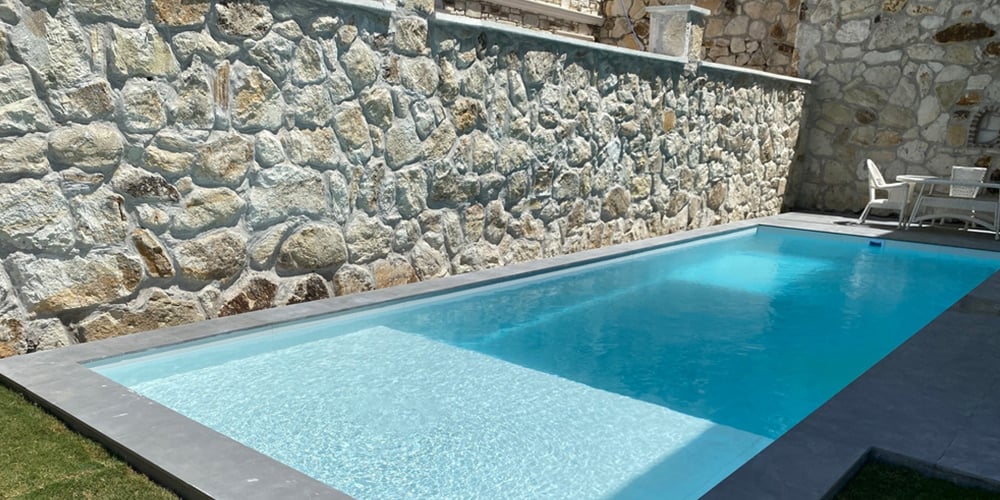
- 10. Retaining Wall Pool Integration — Retaining walls terrace the yard; the pool sits in one leveled terrace. The wall becomes a stone, tile, or timber feature.
- 11. Hillside Step-Down Pool — Steps cascade from yard level to the pool entry. The exposed downhill wall is finished as a feature wall.
- 12. Cut-and-Fill Pool Design — Yard is cut into the hill on one side and filled on the other, placing the pool in a semi-level pocket with minimal excavation.
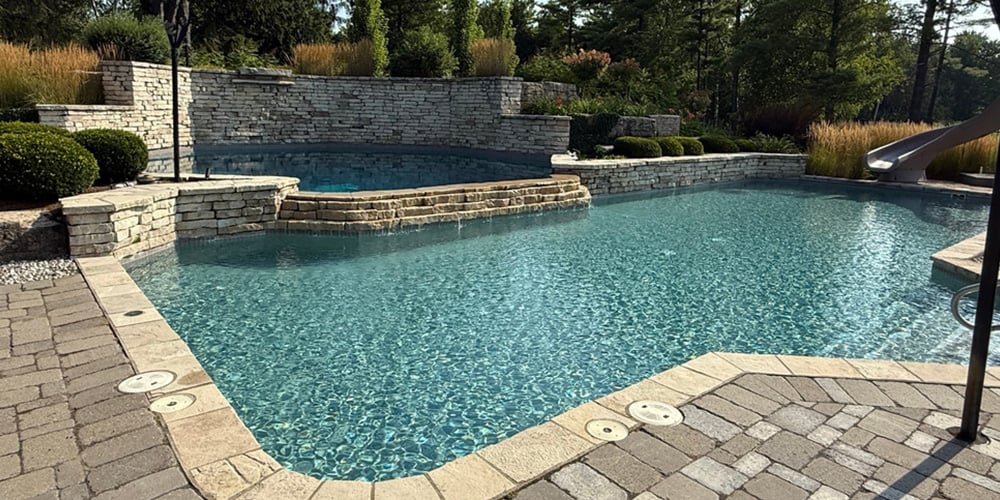
- 13. Terraced Garden Pool — Multiple terrace levels planted with native landscaping surround the pool. Ideal for naturalistic or Mediterranean aesthetics.
- 14. Slope-Side Lap Pool — A narrow pool runs along a slope with one long wall exposed as a feature wall. Great for exercise-focused homeowners.
- 15. Berm Pool Design — Earth is mounded around the pool walls, landscaped with grass or plantings, for a naturalistic feel on a flat site.
C. Material-Based Designs
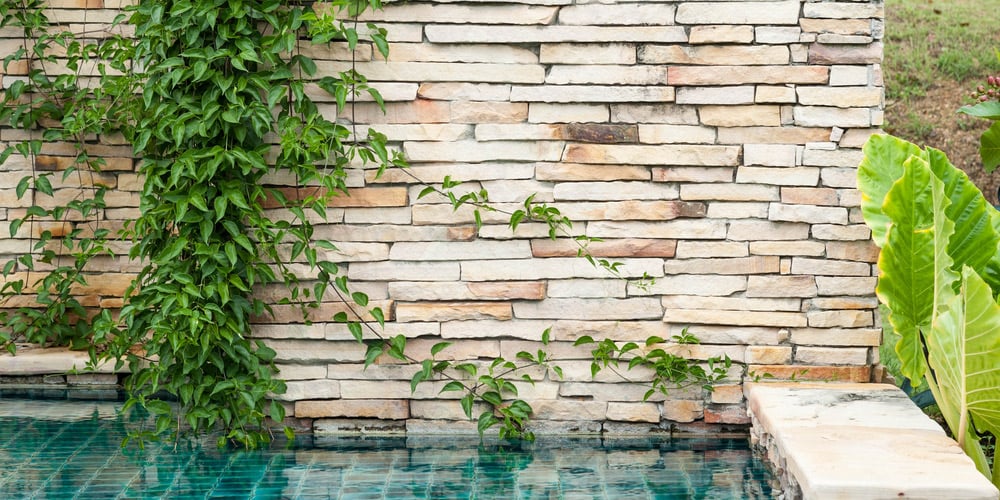
- 16. Natural Stone Surround — Fieldstone, limestone, or slate stacked around the exterior. Old World or rustic look. Best for cottage, Mediterranean, or natural garden styles.
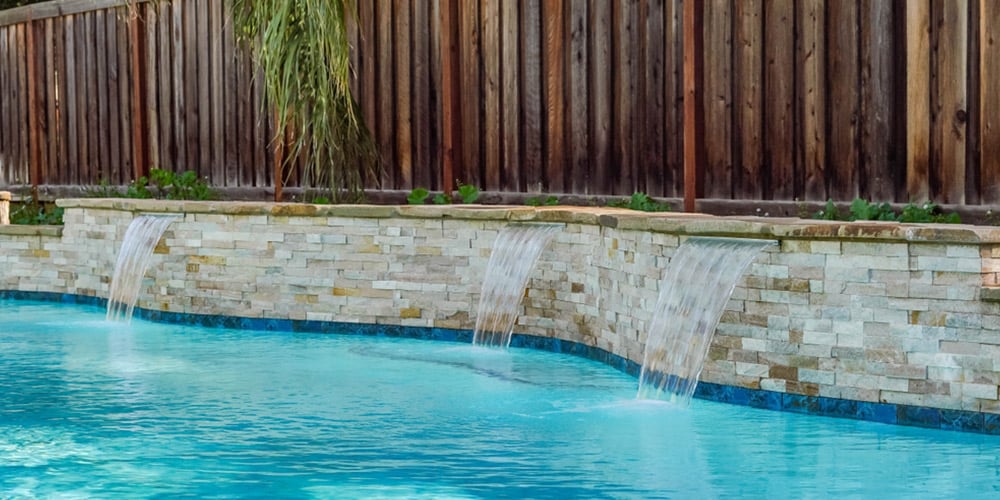
- 17. Concrete Patio Integration — Poured or stamped concrete extends from patio to pool coping for a unified, integrated look.
- 18. Wood Cladding (Cedar or Redwood) — Horizontal or vertical boards create a warm Scandinavian-inspired finish. Affordable and attractive — requires regular sealing.
- 19. Composite Cladding — Composite boards mimic wood with almost zero maintenance. Resists warping, fading, and rot.
- 20. Glass Wall Panel Pool — One or more sides use tempered glass panels to show the water. Spectacular at night with interior lighting.
- 21. Tile-Clad Feature Wall — Mosaic or large-format tile covers the exposed wall. Works beautifully for Mediterranean, Spanish, or Moroccan themes.
- 22. Gabion Wall Pool — Wire mesh baskets filled with river rock surround the pool. A contemporary, textural design element often used in landscape architecture.
- 23. Brick Surround Pool — Classic brick cladding brings a timeless, traditional look. Works well with historic-style homes and formal garden designs.
D. Luxury & Modern Designs
- 24. Black Liner Pool — A dark liner gives the water a dramatic blue-black appearance. Very popular in contemporary homes. Available in fiberglass and vinyl.
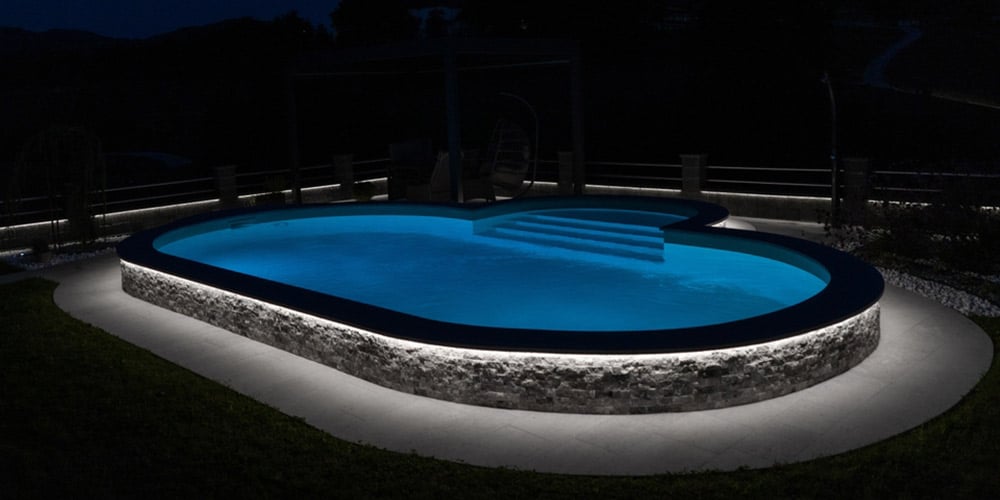
- 25. Geometric Minimalist Pool — Clean rectangular or square form, monochrome palette, minimal coping. Best for modern and contemporary architecture.
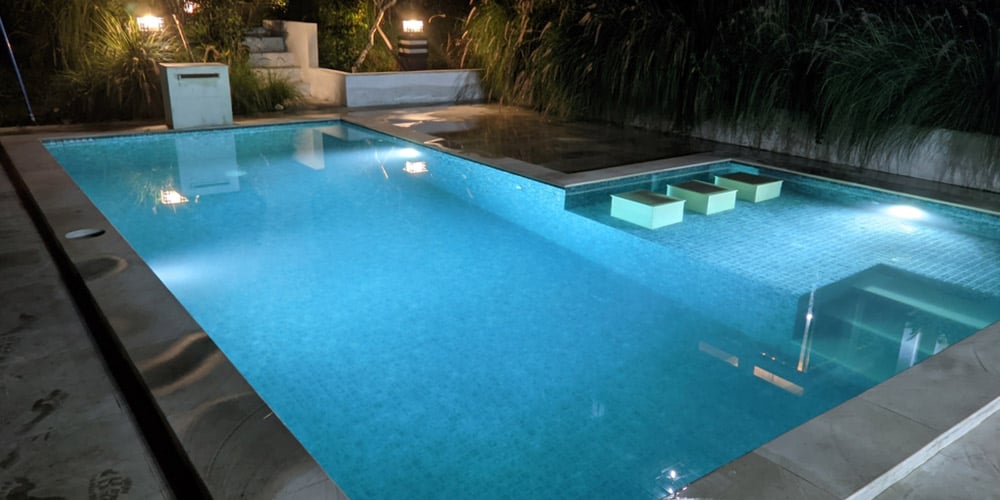
- 26. LED Lighting-Focused Pool — Underwater and perimeter LED lighting creates a resort atmosphere after dark. Programmable RGB systems allow colour changes.
- 27. Spa-Integrated Pool — A built-in hot tub or spa connects to the pool, water cascading from spa to pool. Creates a year-round resort-style experience.

- 28. Fire-and-Water Pool — Fire bowls or gas burners at the pool’s edge contrast dramatically with the water. One of the most photographed backyard designs.
- 29. Negative-Edge (Vanishing Edge) Pool — Water flows over one or more edges into a hidden catch basin. Easier to engineer on sloped semi-inground properties.
- 30. Plunge Pool Design — Compact, deep pool (8–12 ft x 6–10 ft) for cooling off. Fast and cost-effective to install. Ideal for small yards.
E. Budget-Friendly Designs
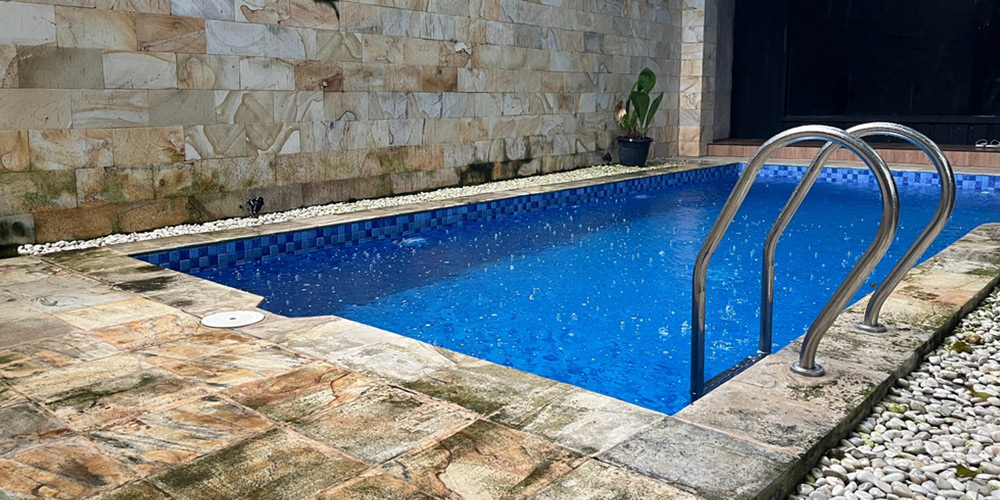
- 31. Partial-Bury Above-Ground Pool — An above-ground pool sunk 12–18 inches into an excavated area. Dramatically improves the visual profile at very low cost.

- 32. Gravel Surround Pool — Gravel or decomposed granite replaces expensive decking. Works well with desert or cottage landscaping.
- 33. Landscaped Berm Pool — Earth shaped and planted around the pool walls. A naturalistic look for minimal material cost.
- 34. Stock Tank Semi-Inground — Large galvanised stock tanks partially buried as plunge pools. Costs as low as $1,500–$3,000 all-in. A popular DIY choice.
- 35. DIY Deck + Pool Kit — Panel pool kits for semi-inground installation paired with a DIY timber deck can cost 40–60% less than a contractor-built pool.
F. Shape & Style Variations
- 36. Kidney-Shaped Pool — Curved form that softens formal gardens and works in irregularly shaped yards. A retro-resort aesthetic.
- 37. Round or Oval Pool — Partially buried with a timber or composite surround, round pools become a charming focal point. Ideal for smaller yards.
- 38. Freeform Natural Pool — Organic shapes mimic natural ponds, paired with stone coping and plantings for a tropical or naturalistic look.
- 39. L-Shaped Pool — Two zones in one structure: a deep end for swimming and a shallow end for children or lounging. Best for larger yards.
- 40. Narrow Lap Pool — 10 ft wide by 30–40 ft long. Maximizes yard length for exercise. Ideal when yard width is constrained.
- 41. Cocktail Pool / Spool — A hybrid spa-pool (10–15 ft) with built-in seating ledges and jets. Compact size makes semi-inground installation fast and affordable.
G. Lifestyle & Feature-Based Designs
- 42. Family Pool with Safety Ledge — A broad, shallow entry ledge gives young children safe, gradual water access. Paired with durable coping and bright tile.
- 43. Entertainment Pool with Outdoor Bar — The pool wall is capped with a countertop to create a pool-side bar. Add bar stools and a built-in grill for a complete outdoor entertainment centre.
- 44. Zen Garden Pool — Simple rectangular form, neutral palette, raked gravel and pruned shrubs. Promotes calm and a spa-like atmosphere.
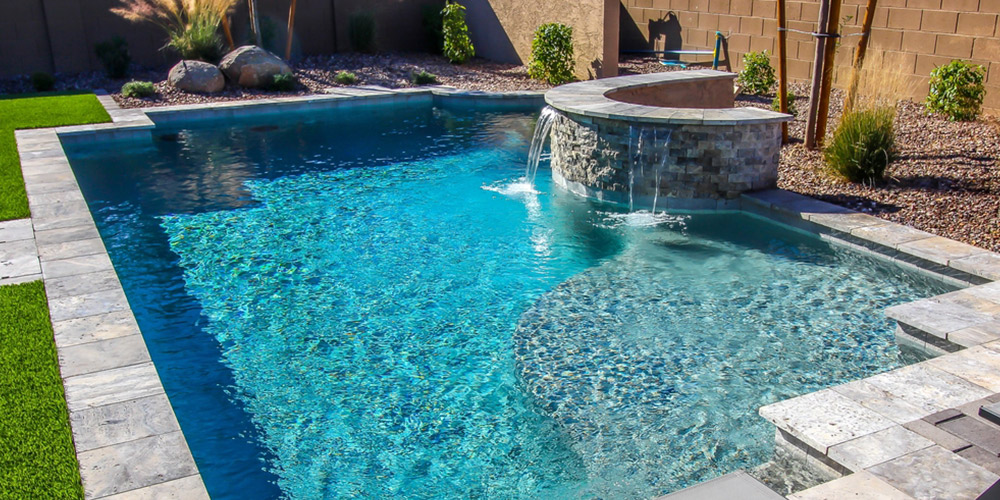
- 45. Water Feature Pool — Waterfall walls, deck jets, bubblers, or sheet waterfalls make the space feel alive.
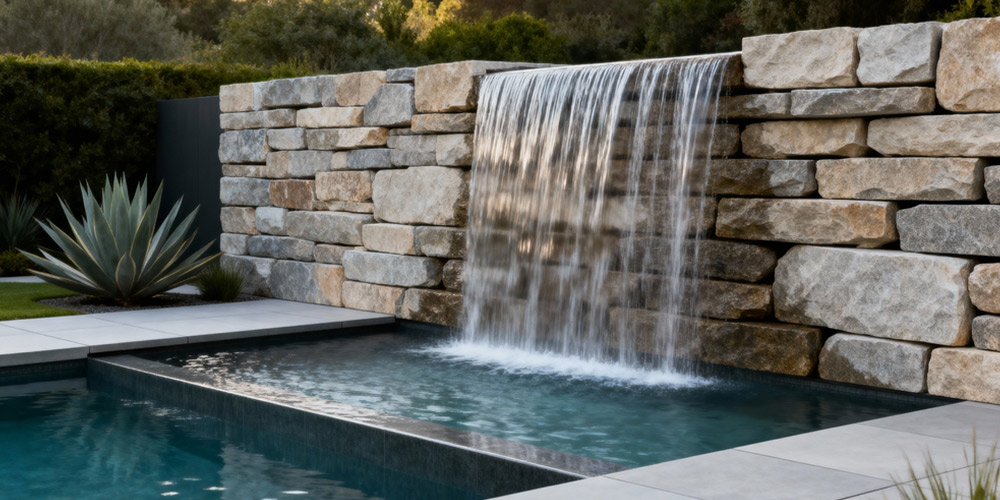
- 46. Saltwater Pool — Saltwater chlorination replaces traditional chlorine. Gentler on skin and eyes, lower long-term chemical costs.
- 47. Solar-Heated Pool — Solar panels heat the pool water, significantly reducing energy costs. A popular upgrade for sun-rich climates.
- 48. Smart Pool Design — Automated pump scheduling, app-controlled lighting, and remote chemical dosing reduce maintenance time and energy use.
- 49. Eco-Naturalistic Pool — A bio-pool using plant filtration instead of chemicals. Blends into the garden as a natural water feature.
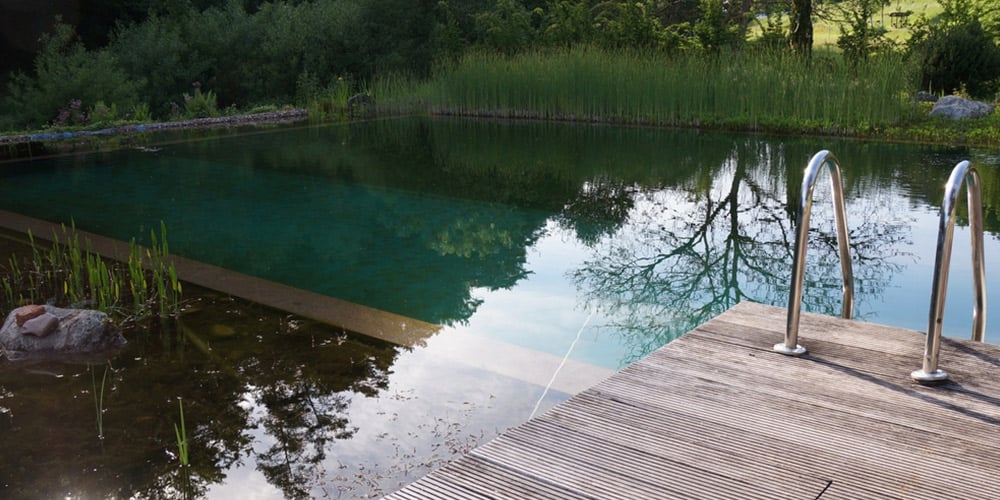
- 50. Covered / Enclosed Pool — A retractable or fixed enclosure extends the swimming season year-round. Popular in cooler climates and for families with young children.
How to Choose the Right Semi-Inground Pool Design
With 50 designs to choose from, narrowing things down comes down to five key factors. Work through each one to find the option that best fits your situation.
1. Yard Slope & Terrain
- Flat yard: Deck-integrated designs (Section A) work best
- Gentle slope (1–3 ft): Multi-level decks or terraced garden designs
- Moderate slope (3–6 ft): Retaining wall integration or hillside step-down
- Steep slope (6+ ft): Hillside infinity edge or cut-and-fill design
2. Budget
| Budget Range | Best Design Options |
|---|---|
| Under $15,000 | Stock tank plunge pool, partial-bury above-ground, gravel surround |
| $15,000 – $30,000 | Vinyl liner semi-inground with timber deck, basic wraparound deck |
| $30,000 – $60,000 | Fiberglass semi-inground with composite deck, retaining wall integration |
| $60,000+ | Infinity edge, glass wall, spa-integrated, fire-and-water, luxury builds |
3. Primary Use
- Swimming laps: Narrow lap pool (#40)
- Family with young children: Tanning ledge (#7) or safety ledge (#42)
- Entertaining: Bi-level entertainment deck (#8) or outdoor bar pool (#43)
- Exercise + hydrotherapy: Spa-integrated pool (#27) or cocktail spool (#41)
- Aesthetic statement: Infinity edge (#9), fire-and-water (#28), or black liner (#24)
4. Maintenance Tolerance
- Low: Fiberglass shell + composite deck + saltwater system (#46)
- Moderate: Vinyl liner pool with timber deck (liner replacement every 10–15 years)
- Higher: Natural stone surround, wood cladding, traditional chlorine system
5. Home Style
- Modern/contemporary: Geometric minimalist (#25), black liner (#24), glass wall (#20)
- Traditional/colonial: Brick surround (#23), wraparound deck (#1), kidney shape (#36)
- Cottage/farmhouse: Wood cladding (#18), stock tank plunge pool (#34), gravel surround (#32)
- Mediterranean/Spanish: Tile-clad wall (#21), freeform natural pool (#38), stone surround (#16)
Best Semi-Inground Pool Designs for Sloped Yards
Sloped terrain is one of the most common reasons homeowners choose semi-inground over fully inground pools. A full inground install on a slope requires expensive cut-and-fill earthworks or significant retaining structures just to create a level pad. A semi-inground pool works with the slope naturally — often at significantly lower cost, while creating more dramatic results.
Why Sloped Yards Suit Semi-Inground Pools
- Reduced excavation — you only dig as deep as the buried portion
- The downhill side naturally creates an infinity-edge platform
- Exposed walls on the low side become a canvas for stone, tile, or timber
- Required retaining walls become integrated design features
- Less earthmoving = lower contractor costs, especially in rocky or clay-heavy soils
Terrain-Specific Recommendations
| Slope Type | Recommended Design | Key Consideration |
|---|---|---|
| Gentle (1–3 ft over 20 ft) | Multi-level deck pool or terraced garden pool | Deck height offset creates natural seating zones |
| Moderate (3–6 ft over 20 ft) | Retaining wall integration or hillside step-down | Invest in a stone or tile wall finish — it becomes a feature |
| Steep (6+ ft over 20 ft) | Hillside infinity edge or cliffside perch pool | Consult a structural engineer; drainage plan is essential |
| Uneven / Irregular terrain | Berm pool or freeform natural pool | Flexible form adapts to yard contours without major grading |
Semi-Inground Pool Materials: Pros, Cons & Costs
The shell material is the most important structural decision you’ll make. It affects cost, longevity, maintenance, available shapes, and the overall look of your pool.
| Material | Pros | Cons | Relative Cost |
|---|---|---|---|
| Fiberglass | Low maintenance, smooth surface, fast install, energy efficient | Limited custom shapes, higher upfront cost | $$$ |
| Vinyl Liner | Most affordable, wide shape variety, smooth feel, easy repairs | Liner replacement every 10–15 years, can puncture | $$ |
| Steel / Aluminum | Very durable, versatile shapes, can go deep | Higher upfront cost than vinyl, may need protective coating | $$–$$$ |
| Resin / Polymer | Rust-proof, low maintenance, good for humid climates | Fewer installer options, less widely available | $$–$$$ |
Semi-Inground Pool Costs: What to Expect
Semi-inground pools typically cost 30–50% less than comparable fully inground pools, primarily because less excavation is required. Here is a realistic breakdown.
Installed Cost Ranges by Pool Type
| Pool Type | Average Installed Cost | Notes |
|---|---|---|
| Above-ground (standard) | $2,000 – $8,000 | Lowest cost; thinnest walls |
| Semi-inground (vinyl liner) | $15,000 – $35,000 | Most popular; liner replacement needed |
| Semi-inground (fiberglass) | $25,000 – $55,000 | Low maintenance; limited shapes |
| Semi-inground (steel/aluminum) | $20,000 – $45,000 | Durable; versatile shapes |
| Fully inground (vinyl) | $35,000 – $65,000 | Full excavation required |
| Fully inground (concrete) | $50,000 – $100,000+ | Most expensive; most customizable |
Additional Cost Factors
- Deck construction: $8,000 – $25,000 depending on size and material
- Landscaping: $2,000 – $15,000
- Retaining walls (for sloped yards): $5,000 – $20,000
- Pool fence / safety barrier: $1,500 – $5,000
- Heating system: $1,500 – $5,000
- LED lighting: $500 – $3,000
- Water features: $1,000 – $10,000+
Financing Your Pool
Most homeowners don’t pay for a pool in cash — and you don’t need to. Viking Capital specializes in pool financing with competitive loan options that spread the cost into affordable monthly payments. You can check your options without affecting your credit score.
Deciding on a Semi-Inground Pool
There are a lot of different reasons to go with a semi-inground pool. The style works well with different terrain and provides you with a number of options for customization. But the biggest question is whether you found yourself nodding along with some of the ideas and coming up with your own ways to work with the design philosophy. If so, you may have found your perfect pool.
If you are researching pools and want to get your dream pool with all the features that you imagined of when you thought of having your very own pool, talk to us. At Viking Capital we can offer finance on your pool project to ensure you get exactly the pool you want, at a monthly rate that suits you.
Frequently Asked Questions
What materials are popular for semi-inground pools?
Composite materials and robust panels that mimic wood or stone are trending. These offer durability and a stylish look with less maintenance than traditional materials.
How can landscaping enhance a semi-inground pool?
Landscaping with native plants or creating a garden path leading to the pool can enhance the aesthetic. Tiered garden beds and decorative rocks are also used to integrate the pool into the surrounding environment.
What are some cost-effective features for semi-inground pools?
Saltwater systems and solar heating are cost-effective options. Using a cover when the pool is not in use can also reduce maintenance costs and keep the water clean.
What is a semi-inground pool?
A semi-inground pool is a pool structure that is partially buried in the ground, with a portion of the walls extending above the ground surface. Unlike above-ground pools, which sit entirely on the ground, semi-inground pools feature sturdier walls that support the pressure of surrounding soil. They combine the affordability of above-ground designs with the aesthetics and durability of inground pools.
How deep can a semi-inground pool be?
Most semi-inground pools are installed to a depth of 4–6 feet, similar to a standard inground pool. The exact depth depends on the pool model, soil conditions, and local building codes. Fiberglass shells typically have a fixed depth profile, while vinyl liner pools offer more flexibility.
Are semi-inground pools cheaper than inground pools?
Yes. Semi-inground pools typically cost 30–50% less than comparable fully inground pools. The primary saving comes from reduced excavation — you only dig to the depth of the buried portion rather than excavating the full depth plus working room around the shell.
Can you install a semi-inground pool on a slope?
Yes — this is one of the primary reasons homeowners choose semi-inground. The partially buried structure works with the natural grade, enabling installation on terrain where a fully inground pool would require expensive levelling. The exposed downhill wall can be finished attractively with stone, tile, timber, or composite cladding.
How long does a semi-inground pool last?
With proper maintenance: fiberglass semi-inground pools typically last 25–40+ years; vinyl liner pools last 20–30 years (liners need replacement every 10–15 years); steel or aluminum pools typically last 20–35 years. Longevity is influenced by water chemistry maintenance, climate, and quality of the original installation.
Can a semi-inground pool have an infinity edge?
Yes — and semi-inground pools are often better suited to infinity edges than flat-yard inground pools. The above-grade wall on the low side of a sloped installation naturally creates the platform needed for an overflow edge, making the effect easier and less expensive to engineer.